Minimalism rocks!
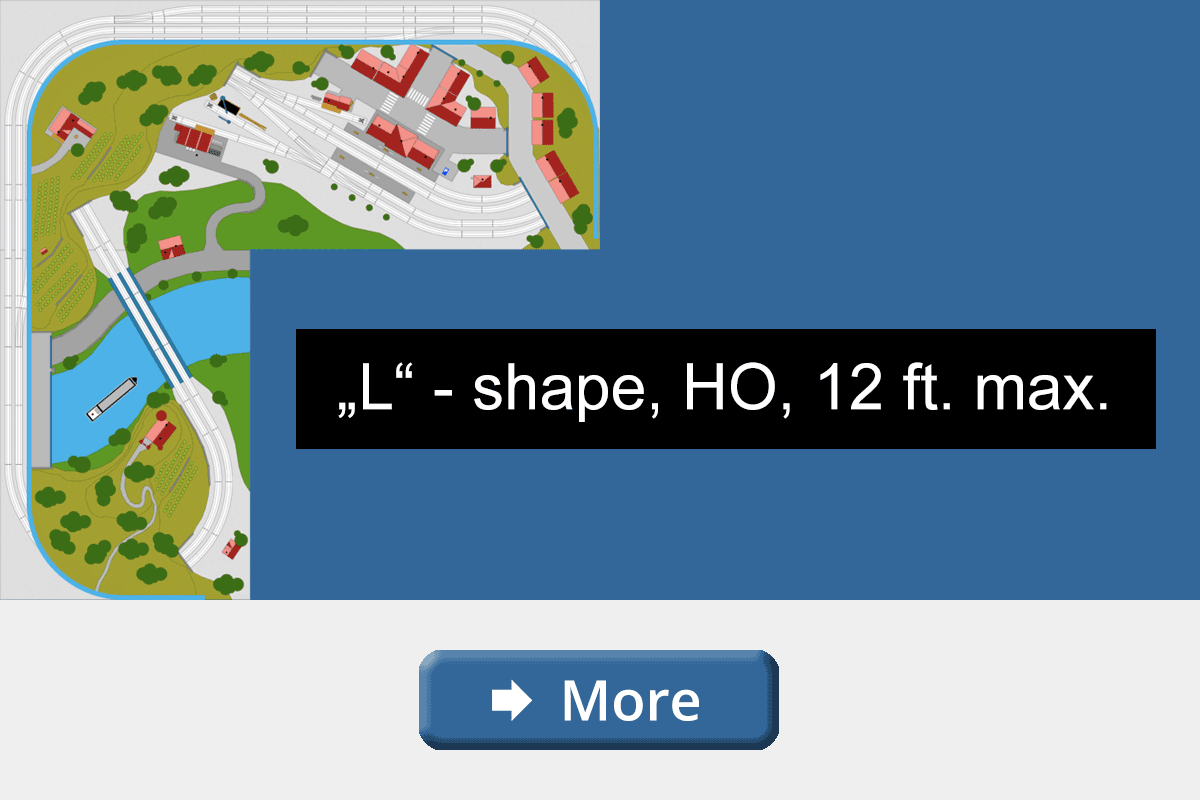
L-shaped track plan (12′ max.) that focuses on one thing: An impressive river landscape.
More: “L” – shaped track plans HO
Everything a classic model railroad layout needs
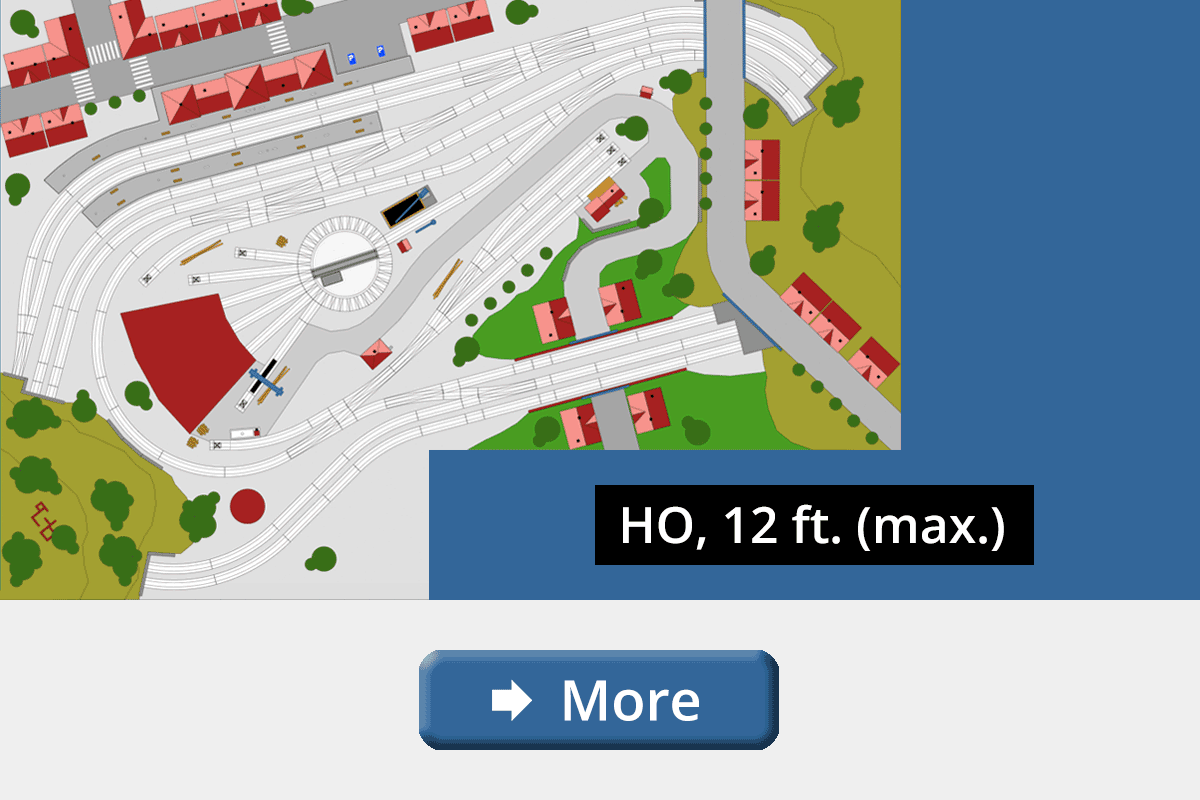
Turntable, parade route with wide curves, railyard and a huge station — right?
More: HO track plans for 12 ft. layout
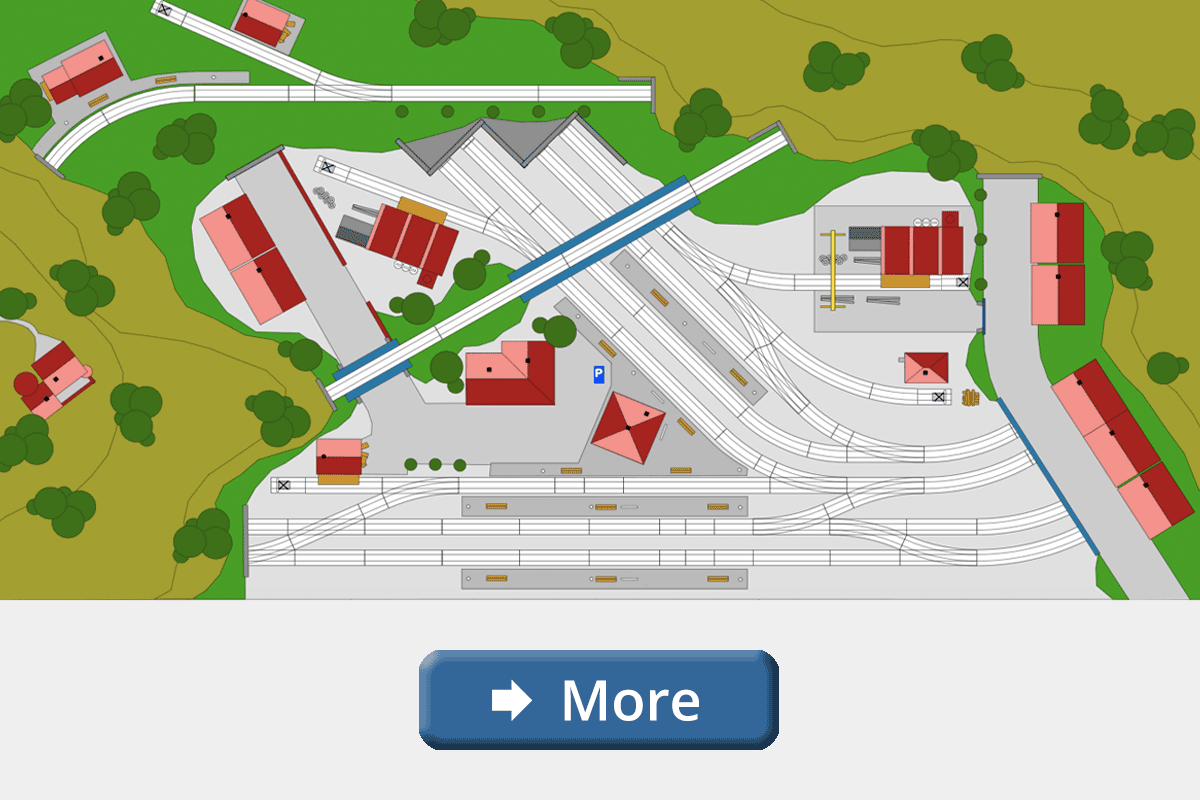
Junction Station
A train station situated in an unusual way, a 2nd station, interesting operations—and a little bluff that makes all big.
More: 5′ x 10′ HO track plan
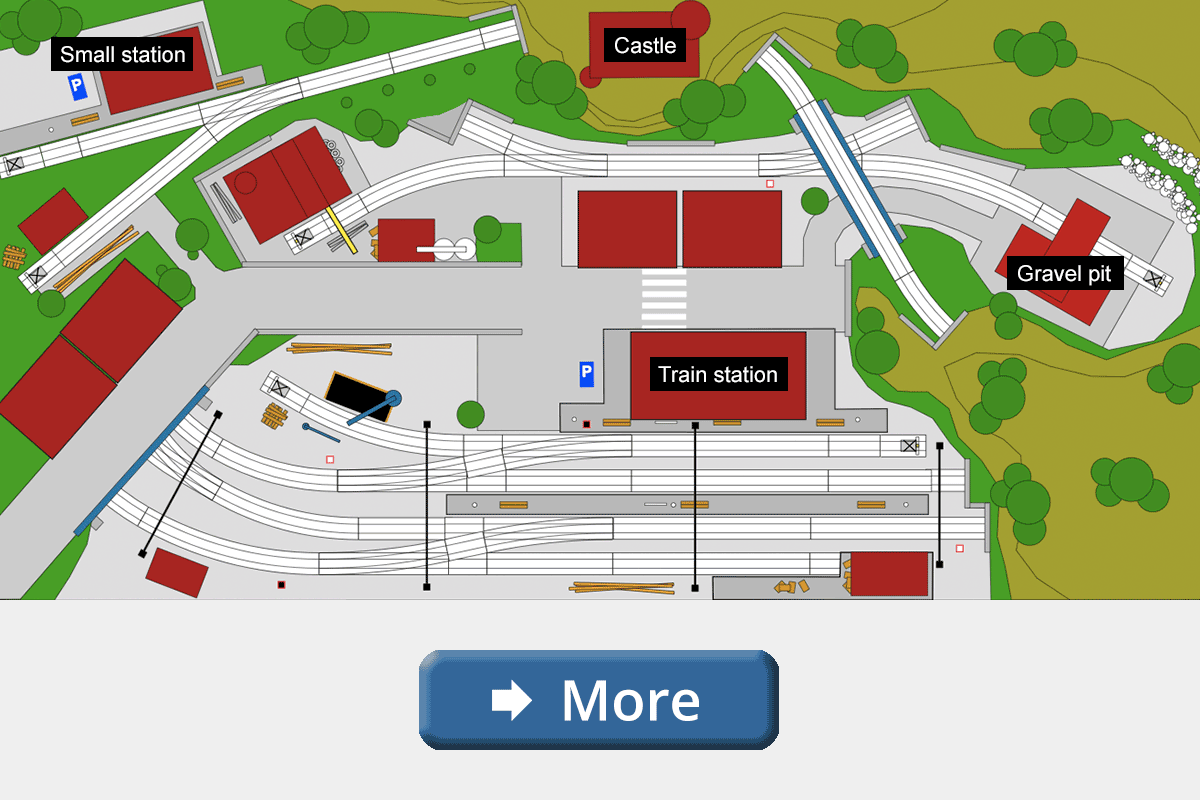
4×8 HO model train layout
Long model trains, busy traffic and nice shunting operations: See what is possible in HO on 4′ x 8′!
More: 4×8 HO model train layouts
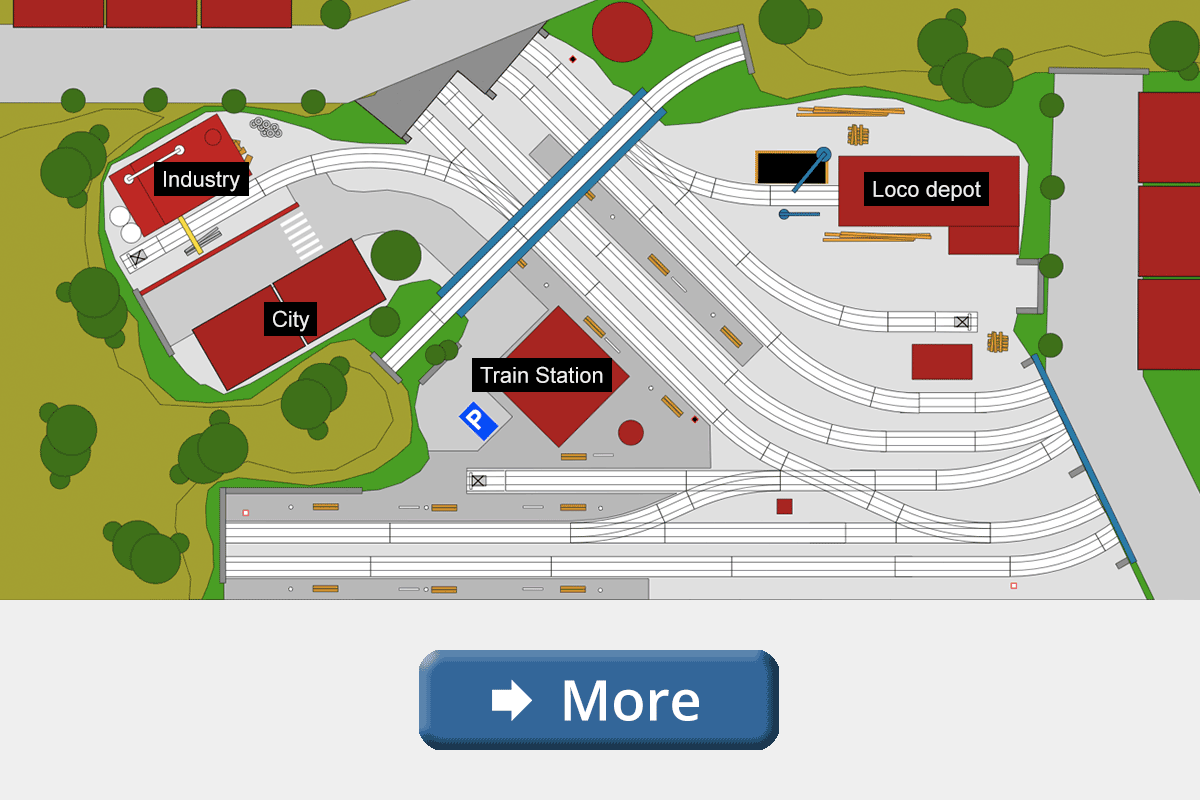
Huge urban station on small 8 x 4
A 4′ x 8′ HO track plan, realized with Märklin tracks. And a smart trick to manage gradient issues …
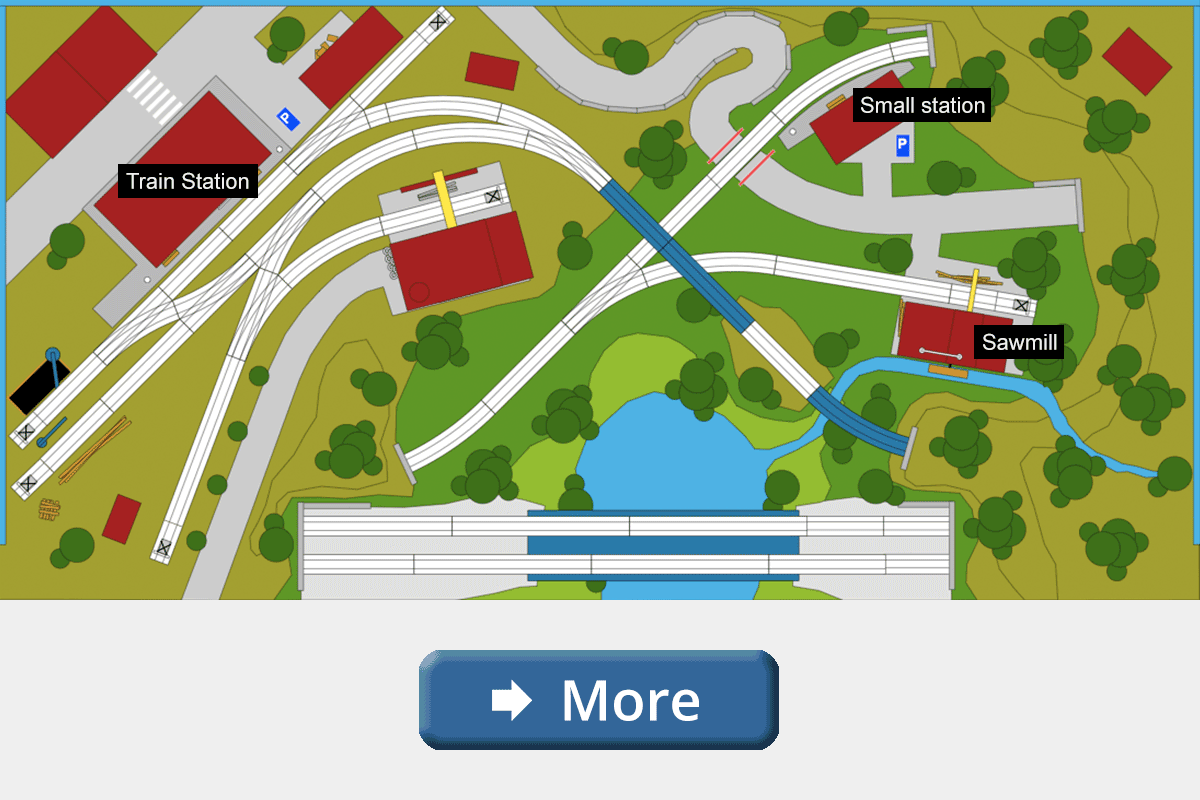
“In the mountains”
High mountains, deep valleys and lots of bridges: I puzzled this picturesque HO gauge train layout on 8×4.
More: HO gauge train layouts
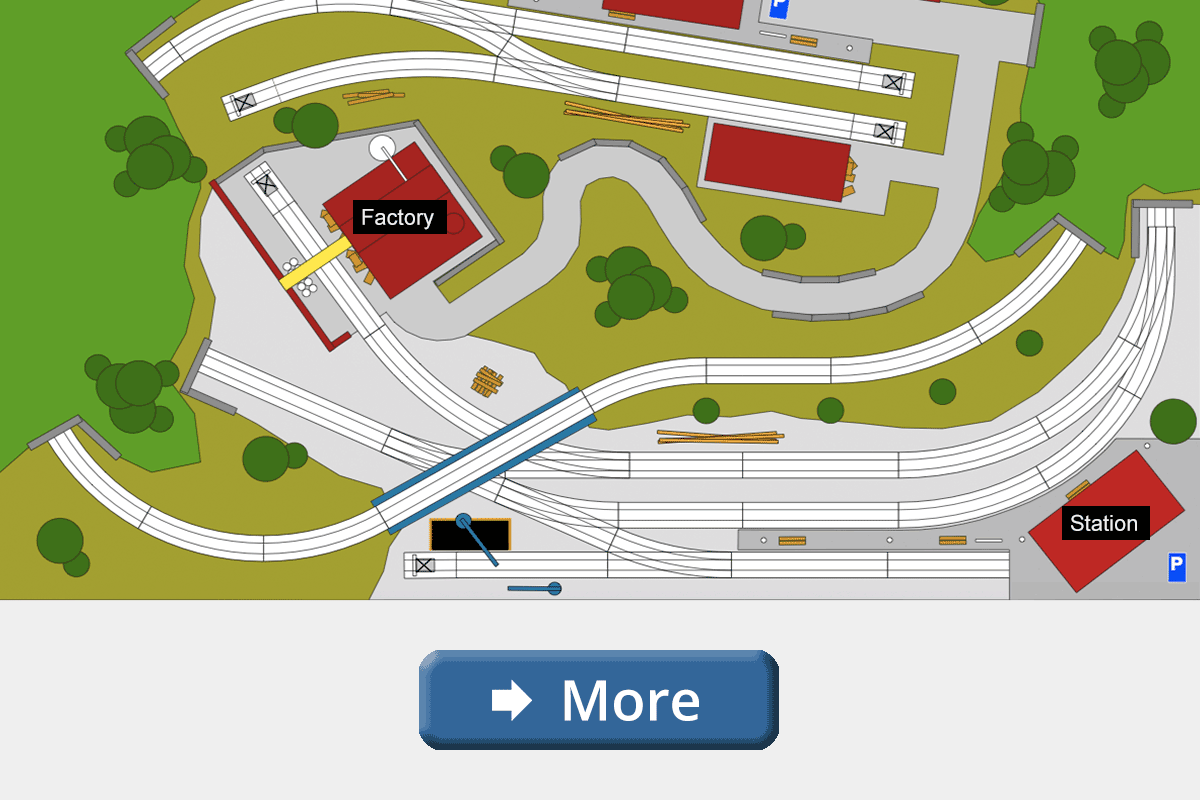
Compact HO track plan “Two Stations”
Two stations on 4′ x 6′ in HO? No, I am not joking. Interesting train operations, based on a folded oval.
More: Compact HO layout
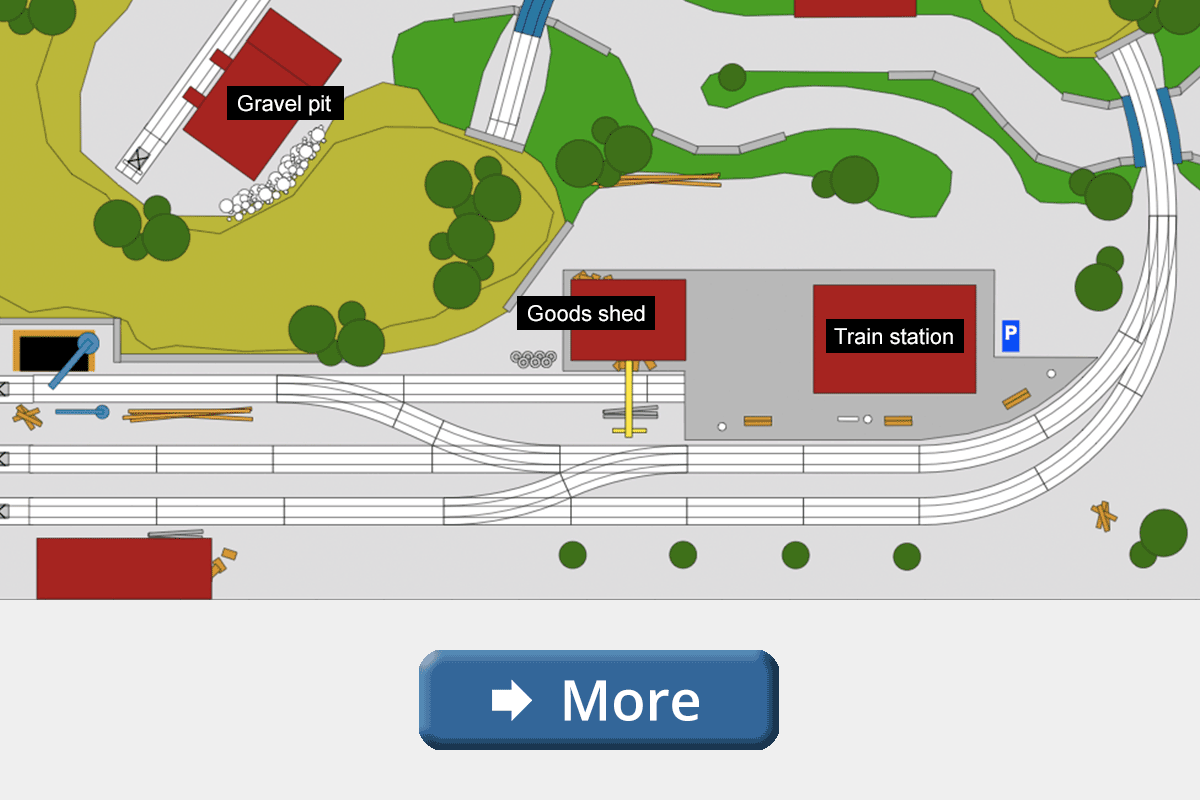
4×6 track plan HO for beginners
Easy to build, moderate size, nice train operations: Realized for Märklin HO (“C tracks”)
More: 4 x 6 HO layout
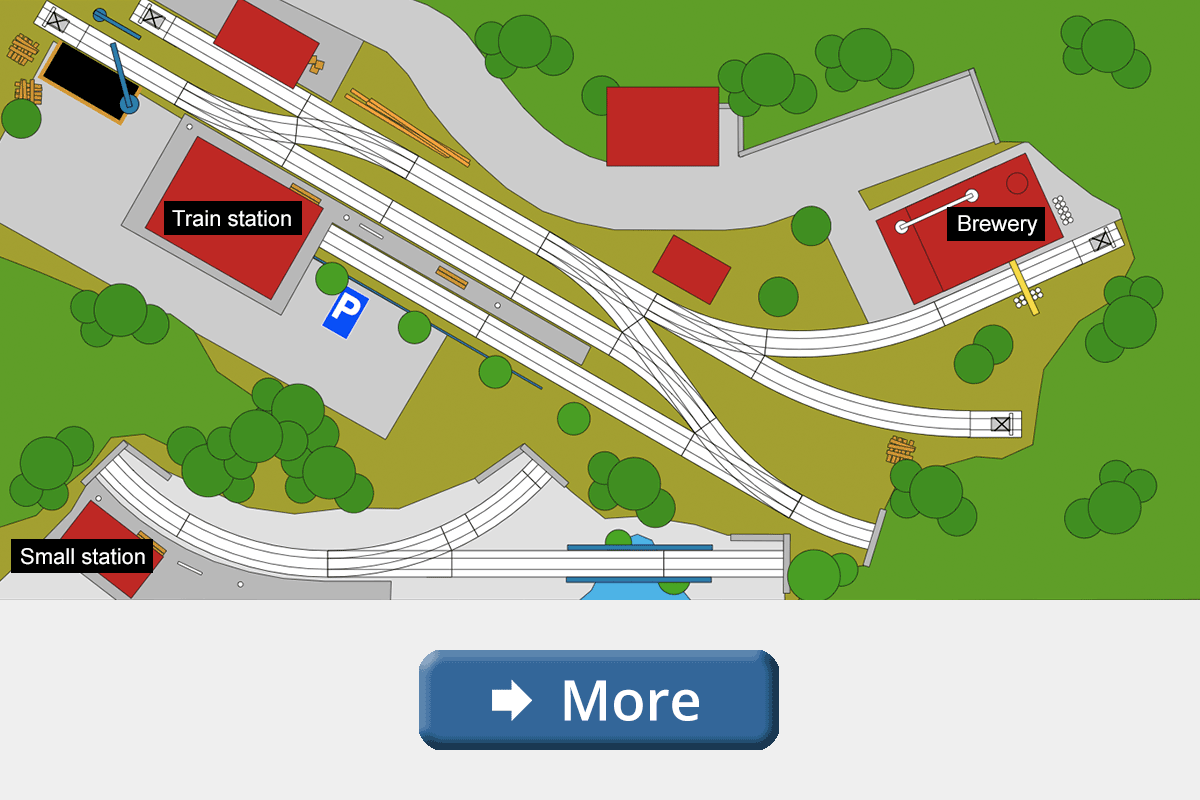
3×6 track plan HO scale
If you think it’s impossible to create an exciting HO layout on a compact 3′ x 6′ baseboard, then see this track plan idea!
More: 3 x 6 HO layout
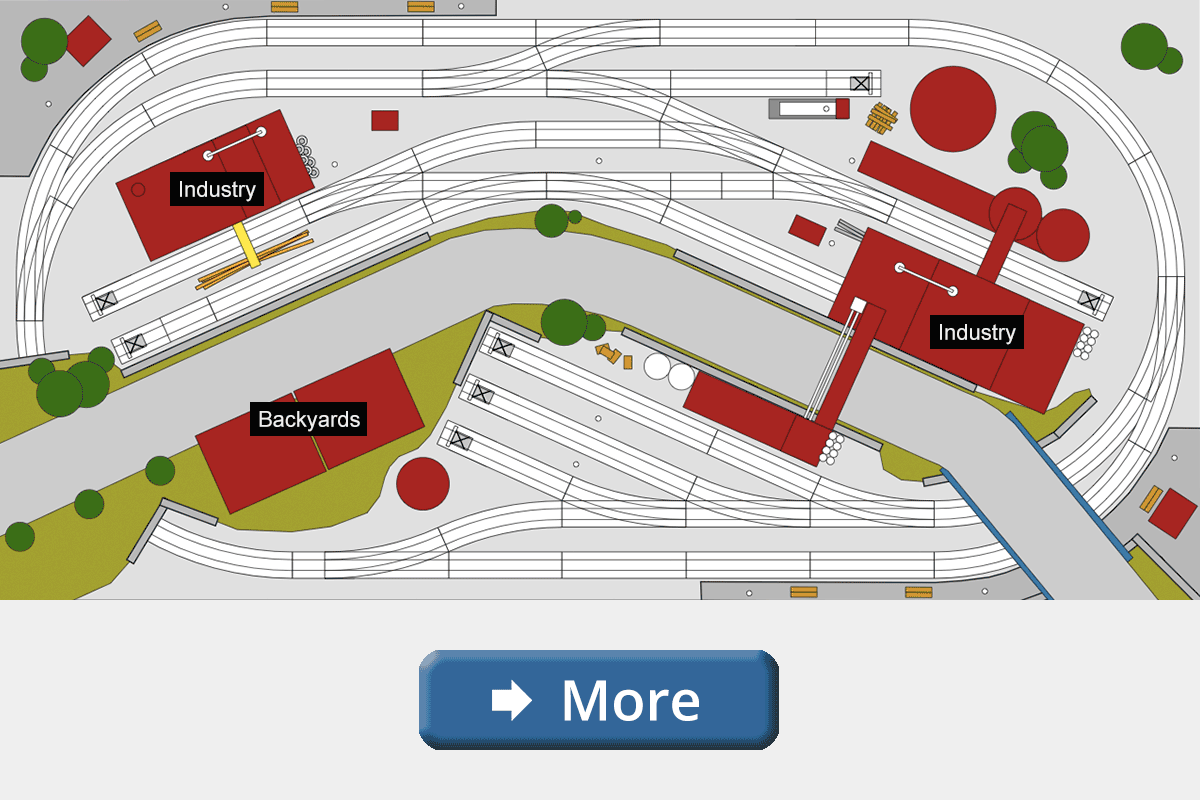
Shunt like a champion!
An industrial setting on 3′ x 6′ baseboard with timesaver & inglenook.
More: HO scale switching layout
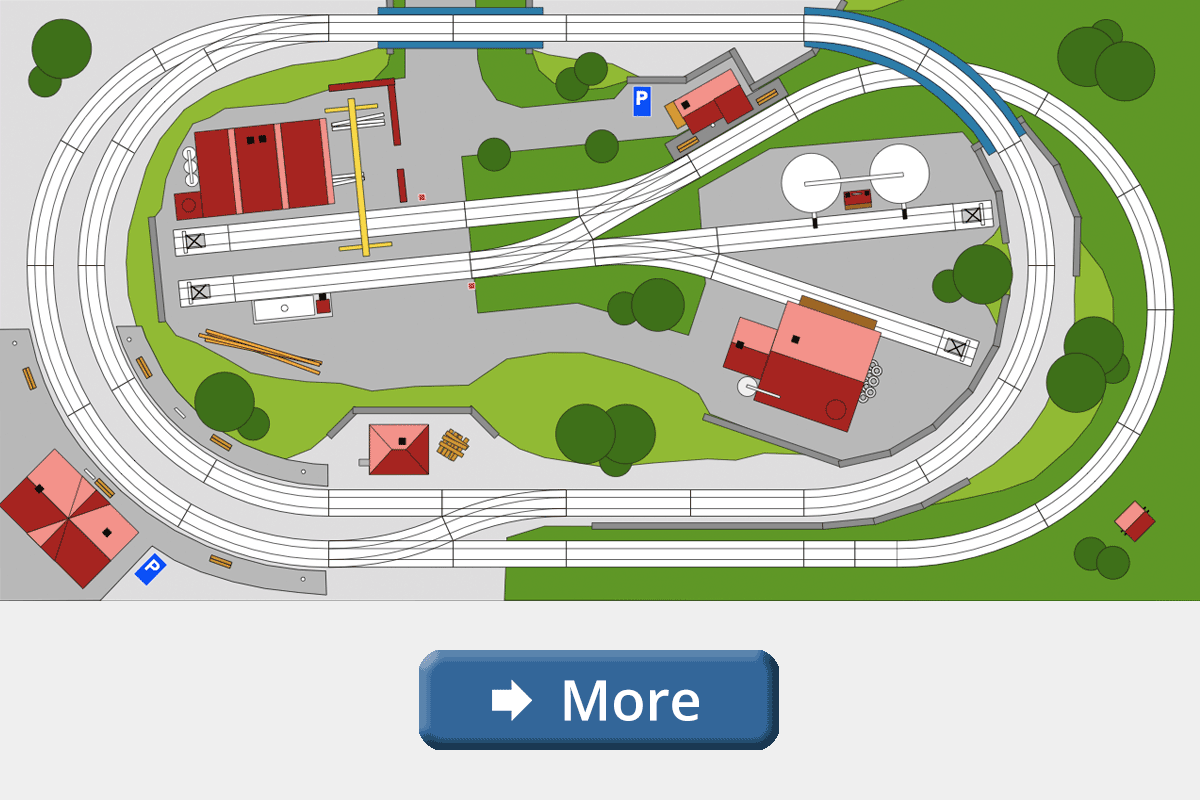
This tabletop idea is surprising …
An HO layout that offers interesting train maneuvers on a table.
More: Märklin HO Track Plans
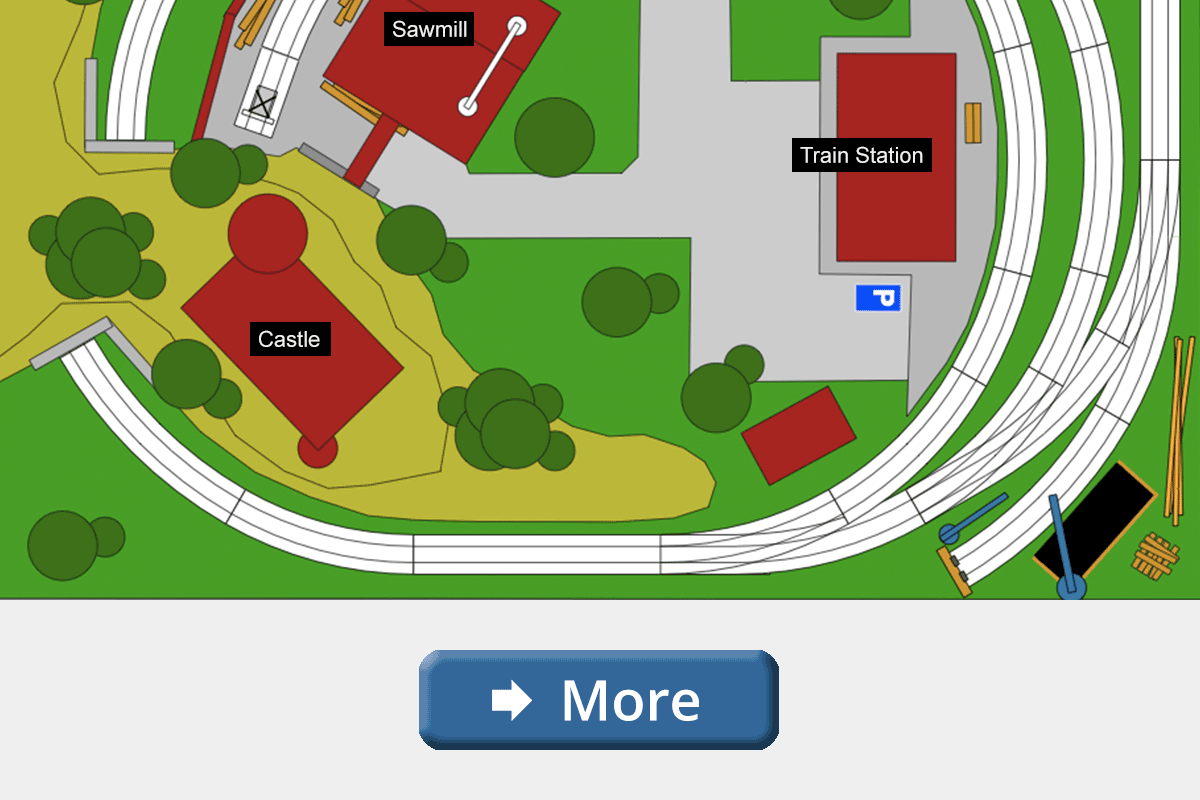
3′ x 4′ HO track plans
A nice & small 3×4 track plan in 2 versions: One for advanced model railroaders, one for beginners.
More: Small HO layouts
Do you like my ideas?
More plans coming – donations welcome!
Track planning in HO: A short introduction
The distance between the left and the right rail is 16.5 mm. This corresponds to approx. 0.650 inches. The scale of HO buildings, rolling stock and other HO accessories is 1:87.
Deviations are possible, depending on whether standard gauge or narrow gauge of the prototype is reproduced as a model.
HO is not widely used in Great Britain. Instead, OO gauge is popular there with a slightly different scale (= 1:76).
The beginnings of HO scale model trains date back to the last century before WW II. Märklin, in particular, introduced its HO scale in the 1930s. Prior to that, the O scale (in German: 0 scale) was dominant with a distance of 32 mm between the left and right rail. This corresponds to about 1.25 ” (=inch). This O gauge was regarded as too big for model railroading at home, so the net distance of 32 mm was roughly halved, resulting in 16.5 mm.
This halving of the size is also the reason for the German term “H0”, an abbreviation meaning “Halb Null” (= half of the number zero). English speaking countries often spell it as “HO”, using the letter “O” instead of the number “0”. But don’t get confused. H0 or HO means the same.
2-rail tracks or 3-rail tracks?
That’s the big question if you are into HO! Because these are two different systems that cannot be combined without extra modifications. Both systems are popular, both systems have advantages and disadvantages, both systems have lovers and haters.
So you have to make a fundamental decision. This applies not only to tracks, but also to locomotives, railcars and electrical issues.
About Märklin HO
The German manufacturer Märklin has a passionate fan communitiy and is well known all over the world. In particular vintage Märklin material is strongly sought after, fetching high prices on the market.
Märklin HO tracks are available in 3 different series: K tracks, C tracks, and (old) M tracks.
Why should I opt for HO track plans?
HO scale disadvantages
HO scale manufacturers
If you are new into HO scale model railroading, here’s a list with well known manufacturers in alphabetical order. This is not a comprehensive market overview, but rather a selection of key providers and brands, along with the country where each company was originally founded.
Keep in mind that some brands meanwhile may have new owners in other countries. Some companies do not offer tracks or rolling stock. Instead, they are specialized in HO scale accessories like buildings, bridges, signals or digital control.
- Atlas (USA)
- Auhagen (Germany)
- Bachmann (USA)
- BEMO (Germany)
- BRAWA (Germany)
- Brekina (Germany)
- Busch (Germany)
- Electrotren (Spain, now Hornby / UK)
- FALLER (Germany)
- Fleischmann (Germany)
- Heki (Germany)
- Heljan (Denmark)
- Herpa (Germany)
- Hornby (United Kingdom / Great Britain)
- Ibertren (Spain)
- Jouef (France, now Hornby / UK)
- KATO (Japan)
- Kibri (Germany, now Viessmann)
- Life-Like (USA)
- Liliput (Austria, now Bachmann / USA)
- Lima (Italy, now Hornby / UK)
- Lionel (USA)
- Märklin (Germany)
- Noch (Germany)
- Peco (UK)
- Piko (Germany)
- Preiser (Germany)
- Rivarossi (Italy, now Hornby / UK)
- Roco (Austria)
- Tillig (Germany)
- Trix (Germany)
- Vollmer (Germany, now Viessmann)
- Walthers (USA)